
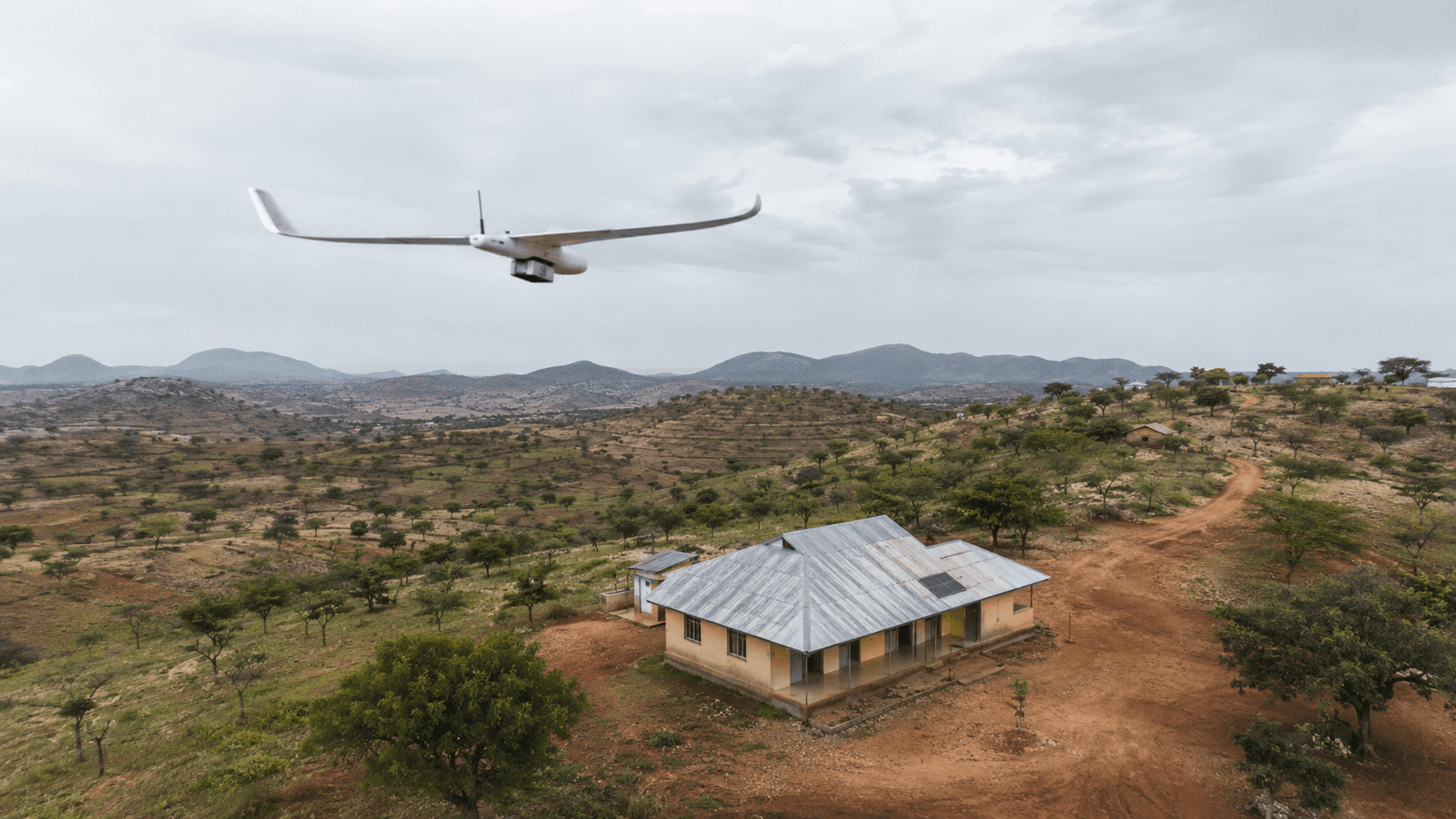
Zipline. One of the most talked-about drone companies in the world, and the one most often held up as proof that drones can solve Africa's logistics problems. Governments praise it. Investors point to it. Founders describe themselves as building "the next Zipline." But here is the irony: Africa's most celebrated drone delivery company isn't African.
That isn't an attack. It's a fact. And it should force a sharper question. If Zipline has shown that drone delivery works in Africa, why have so many companies failed to repeat it? Why do so many drone startups stay stuck in pilot projects instead of becoming part of national health systems?
Flying a drone is the easy part. Building a business that can fly thousands of missions every week, safely, profitably, and with a government's trust, is something else entirely.
And beneath that sits the question this piece is really about: why does the patient capital that makes that kind of integration possible flow almost entirely to foreign-owned companies, while African-linked efforts get funding that structurally cannot scale?
What Zipline Bought With Its Time
Zipline was founded in California in 2014 by Keller Rinaudo Cliffton and co-founders. Africa was not the plan. The goal was to use drones to deliver medical supplies to places where poor roads made transport slow or impossible.
In 2016, Rwanda became the first country to allow it to operate nationwide, delivering blood and emergency supplies to remote hospitals. Then Zipline did something that rarely survives into the founder-story version of events. It stayed.
Roughly three years passed before it opened its next country programme, in Ghana, in 2019. Those years went on air-space rules, training local technicians and health workers, wiring itself into the Ministry of Health's supply chain, and running daily operations in all weather under strict safety controls. By the time it reached Ghana it wasn't copying Rwanda; it was applying a model it had already paid to learn.
Ghana got the better version because someone had funded the worse one for three years.
What the Evidence Shows
According to Zipline, its Rwanda vaccine programme delivered 76,182 doses to 119 rural health posts over the course of 2024, through a partnership with the Rwanda Biomedical Centre, Gavi and the UPS Foundation, a figure the Rwanda Biomedical Centre has publicly echoed. The company says the programme cut delivery costs from $1.87 per dose by road to $0.24 by drone, a reduction of roughly 87 per cent. It reports supplying around 75 per cent of Rwanda's blood deliveries outside Kigali and serving more than 400 hospitals and clinics, with the government targeting close to two million deliveries by 2029.
Those operational figures come from Zipline itself and should be read as the company's own account. Independent research is more useful here, precisely because it doesn't.
A 2022 study in The Lancet Global Health found that drones brought blood to Rwandan hospitals in about 50 minutes on average, and cut the expiry of unused blood units by roughly 67 per cent over a year. The results were not uniform: in a handful of hospitals, drones were slower than existing road delivery, depending on distance and road quality. The gains were real, but they were not automatic.
A separate study by researchers at the Wharton School, published in the peer-reviewed journal Manufacturing & Service Operations Management, examined health outcomes rather than logistics. It found that facilities served by the drone network reduced in-hospital deaths from postpartum haemorrhage by 51 per cent and among trauma patients by 30 per cent, while cutting the blood stock they had to hold on site by 63 per cent. The authors noted that the benefits were largest at facilities closest to the drone ports — a reminder that integration, not the drone itself, is what produces the outcome.
These studies do not confirm Zipline's own delivery numbers or costs. What they establish is narrower and more important: when drone delivery is properly built into a health system, it works.
The question is what building it costs.
What the Pilots Couldn't Buy
Across the continent, Nigeria, Kenya, Malawi, Madagascar... governments, donors and private companies have tested medical drone delivery. Most generated excitement. Few became everyday infrastructure.
Malawi is the clearest case. Since 2017, when the government and UNICEF opened Africa's first humanitarian drone-testing corridor at Kasungu, the country has hosted a rotating cast of operators, Wingcopter's two-year "Drone & Data Aid" project, VillageReach and Swoop Aero across several districts, almost all of it financed by international donors and NGOs. The flights worked. The economics never resolved. As VillageReach itself has acknowledged, the hope was always that the technology might one day graduate from a donor-funded project into a routine service with a secure national budget. For the most part, it hasn't.
The pattern is documented. A peer-reviewed review of the drone programmes in Madagascar, Malawi and Senegal concluded that impact evaluation and full implementation require investment horizons far longer than a pilot grant, and urged funders to commit to long-term projects rather than short bursts of feasibility funding. A 2026 study of Madagascar's programme was blunter: across nine low- and middle-income countries, almost every participant described their national drone effort as a feasibility test meant to generate evidence, not a lasting solution and warned that without long-term financing and real integration, the reliability drones create is temporary.
Part of the explanation is arithmetic. Small pilots are expensive because fixed costs sit on top of very few deliveries, and those costs only fall when they are spread across thousands of flights. A pilot is, by construction, the most expensive way to run a drone network.
Regulation compounds it. The World Bank's 2021 study Unlocking the Lower Skies, by Maria Catalina Ochoa and Aiga Stokenberga, examined drone use cases across East Africa and found that rules need harmonising both between government agencies and across borders, with the technology consistently outpacing the regulation meant to govern it.
But knowing why pilots are expensive doesn't help if you can't afford to get past the pilot stage. That is the part that rarely gets discussed.
The Capital Question
Zipline could spend three years in a single country before expanding because it was not living grant to grant. The company has raised roughly $1.6 billion over its lifetime and was valued at $7.6 billion in early 2026, backed by Sequoia Capital, Andreessen Horowitz, Google Ventures, Temasek, Baillie Gifford, Fidelity and Tiger Global, among others. It could afford to lose money in Rwanda while it learned the terrain, the regulators and the ministries.
The pilots in Malawi and Madagascar ran on donor and NGO money: grant cycles measured in months, renewable, conditional, and structurally incapable of funding a three-year build with nothing to show at the end of year one.
Same technology. Different money. Different outcome.
Founder discipline is not the variable. Patience is not a personality trait when it costs a hundred million dollars a year, it is a line item on a balance sheet. And the money that pays for it goes, overwhelmingly, to companies incorporated somewhere else.
The clearest illustration arrived at the end of 2025. The US State Department pledged up to $150 million to expand Zipline's operations across five African countries — Côte d'Ivoire, Ghana, Kenya, Nigeria and Rwanda — under what it called an America First Global Health Strategy. The structure is worth reading slowly. Washington funds the upfront manufacturing and infrastructure; the African governments, as customers, are expected to pay as much as $400 million in ongoing utilisation fees for the service. The deal is projected to create up to 1,000 jobs in the United States, alongside operations roles in the African markets involved.
American public money, funding an American company, using American-made hardware, to run health infrastructure in African countries that will themselves pay the larger share over time, with the headline jobs figure counted in America.
There is nothing improper about any of it. That is the point. This is what the system produces when it is working exactly as designed. The countries end up owning the operating bill; the company keeps the technology, the intellectual property and the equity that a $7.6 billion valuation represents.
Where Patient Capital Comes From
So the useful question is not how African founders can be more patient. It is where an African founder would find money patient enough to matter.
Three sources exist. Each has a specific obstacle, and none of them is a founder problem.
Domestic institutional capital. African pension funds have grown into serious pools of money. Nigeria's alone expanded from around $7 billion in 2008 to over $23 billion within a decade, and has kept growing since. Their liabilities are long-dated, which in theory makes them a natural match for infrastructure that takes years to return. In practice, almost none of it goes there. Nigerian pension administrators hold well under one per cent of their assets in genuine alternatives, parking the rest in government bonds. Kenya's regulator now allows schemes to put up to 10 per cent into private equity, venture capital and infrastructure, and treats infrastructure as its own asset class, yet with government paper reliably returning double digits, few managers take the option. The obstacle is partly regulatory caps, partly habit, and partly a shortage of investment-grade local deals. All three are fixable, and none is set by a founder. Kenya's pension consortium, KEPFIC, has already begun channelling member funds into roads and power. Proof the money can move when the structure exists.
Government co-investment. Governments are already the customer for medical drone delivery; the State Department deal has them signing up to pay hundreds of millions in service fees. They could instead, or also take equity in the operators that serve their health systems. Doing so would cost less than the utilisation contracts they are already committing to, and it would change who owns that infrastructure a decade from now. Paying to use a network in perpetuity and owning a stake in it are very different bets on the future.
Blended finance. Donor money is not the enemy here; the way it is deployed is. Used as first-loss capital, absorbing the early risk so commercial investors will follow, the same donor dollars that produced Malawi's stranded pilots could instead underwrite a locally owned build. The obstacle is institutional habit: grants are easier to administer, and far easier to report on, than risk capital.
None of these is available to a founder by choice. All three are decisions made by regulators, finance ministries and development agencies.
Zipline didn't win because it had better drones. It won because it understood one market, solved one problem, and earned a government's trust, and because it had the money to do all three slowly.
African founders can copy the first three. The fourth is not theirs to copy. Until the continent decides to build the capital that patience requires, from its own pension savings, its own treasuries, its donors' money spent differently, its most important logistics infrastructure will keep being built by people who own it from somewhere else.